Genetically Modified Organisms
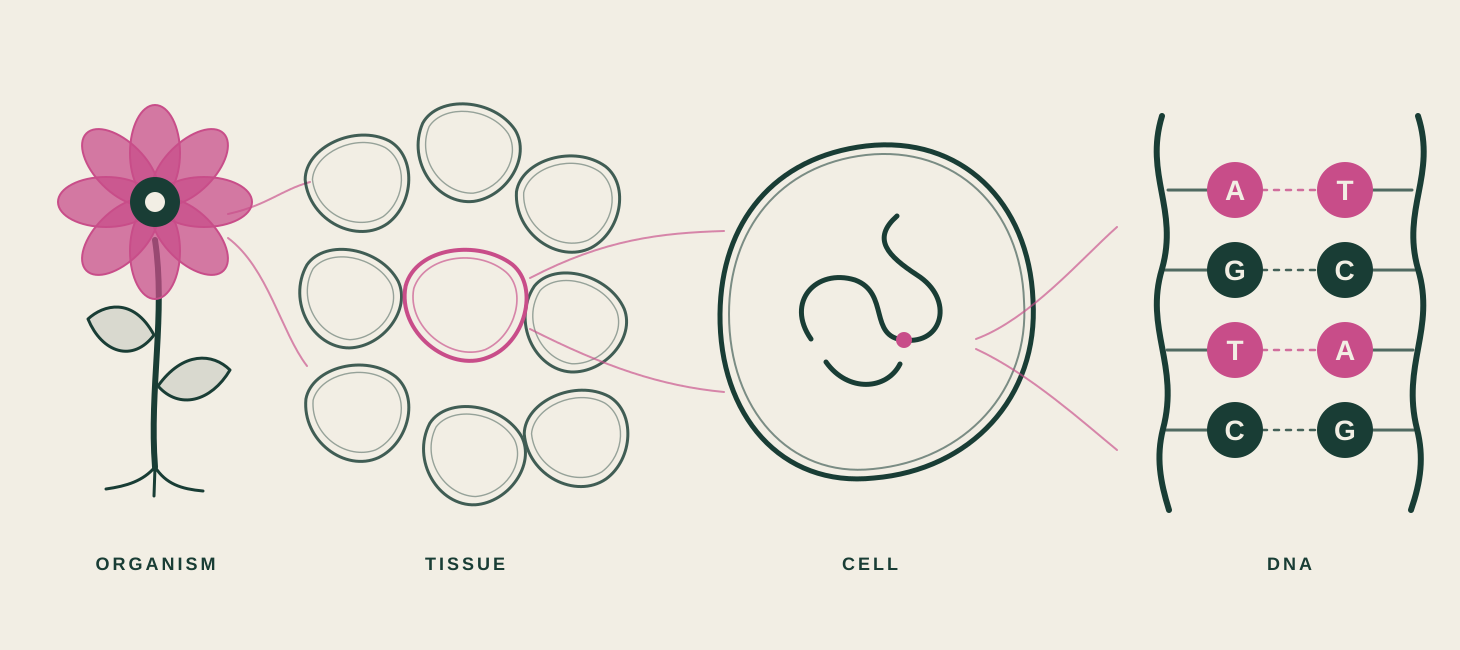
If biology had a god, it would, without a doubt, be DNA. Our bodies as well as every other living being (organism) are composed of tiny individual compartments called cells, separated from each other by layers of fat, and at the heart of each cell in every organism1 lies its DNA, which defines it almost completely. DNA has four building blocks, called bases: adenine (A), thymine (T), guanine (G), and cytosine (C). Millions to billions of these bases are arranged in a sequence in two long strings in each cell, and each pair of strings is identical in each cell inside the same organism. There is an extremely simple rule for how the two strings relate to each other in a cell: an A on string no. 1 will always face a T on string no. 2, and G will always face C, no exceptions. If you have an A facing a G or a C, for example, that is necessarily damage to the cell.
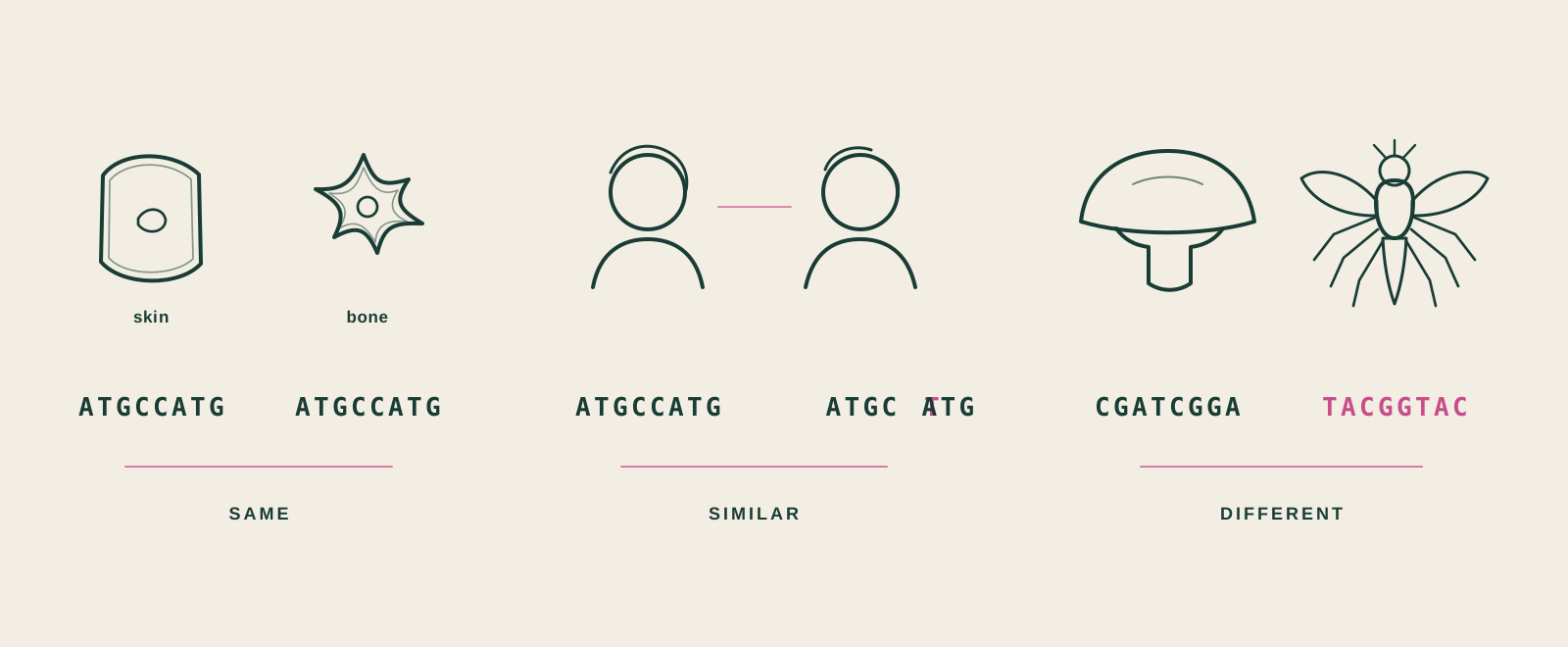
The sequence of DNA bases is identical between cells from the same organism, meaning that if you took a cell from your skin and a cell from your bone and compared the DNA sequence in each, they would be identical. Every person, every cockroach, every tree, and every microbe has its own DNA sequence, identical in all its cells but different than the sequences of other organisms. That is the organism’s genetic sequence—its biological essence. Change the genetic sequence by a little, and you usually change the organism’s essence by a little; change it enormously, and you have a different creature. For instance, two different people have very similar genetic sequences, while a mushroom and a mosquito hugely differ in their sequences.
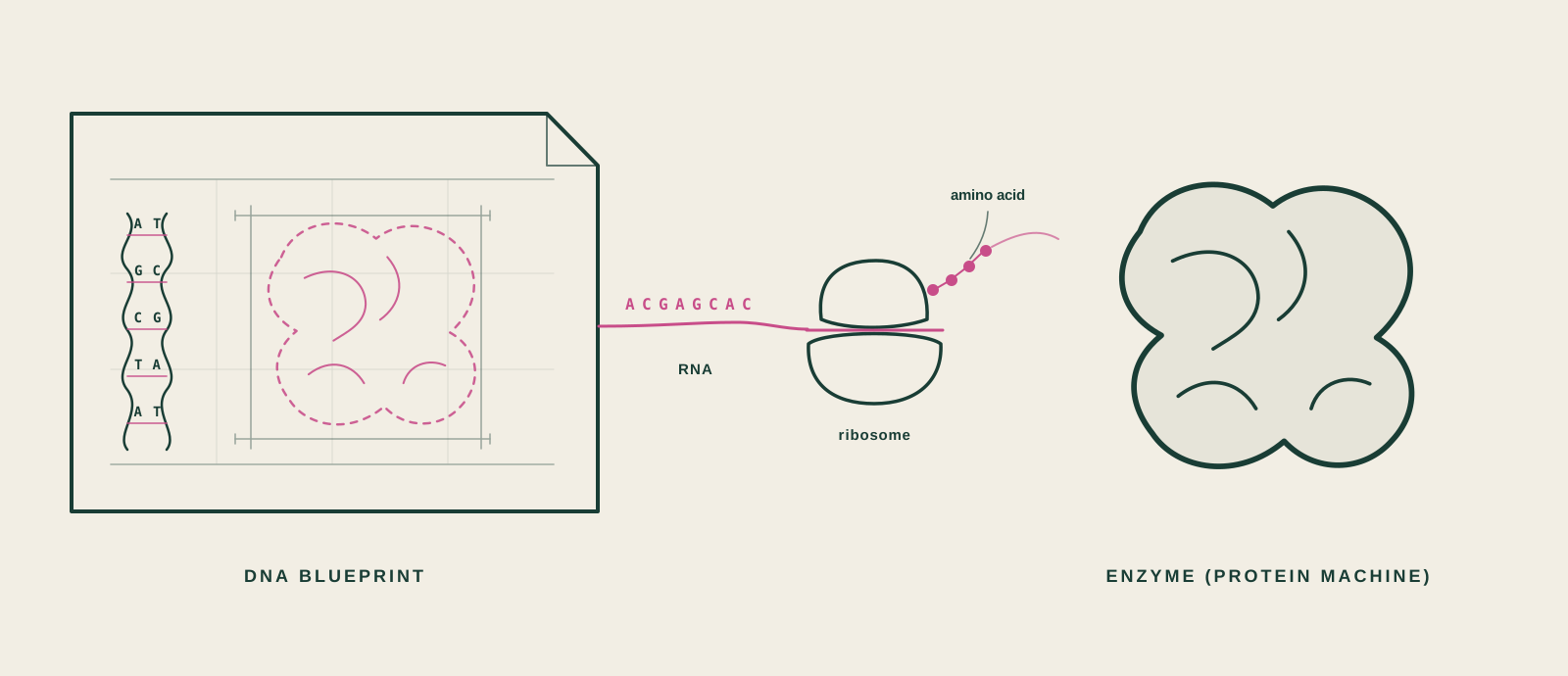
How does DNA determine what we are? The sequences every creature holds are essentially instruction manuals; you can think of the letters A, C, T, and G as an alphabet spelling out blueprints for various machines made of proteins. Each protein machine (enzyme) has a different purpose: build this, move that, disassemble these (when we eat protein, our digestive tract breaks it down into the amino acids that compose it, which is why the terms protein and amino acids are used almost interchangeably in nutrition). Organisms are different from one another, because each has a different genetic sequence holding designs for different machines acting on the world in different ways. I won’t get into the precise mechanism of how DNA encodes proteins and will only note that DNA is too precious to be exposed to the dangerous outside world, so cells use an intermediary called RNA to copy the blueprints from the strings of DNA and carry these copies to the industrial plants that produce proteins, called ribosomes.
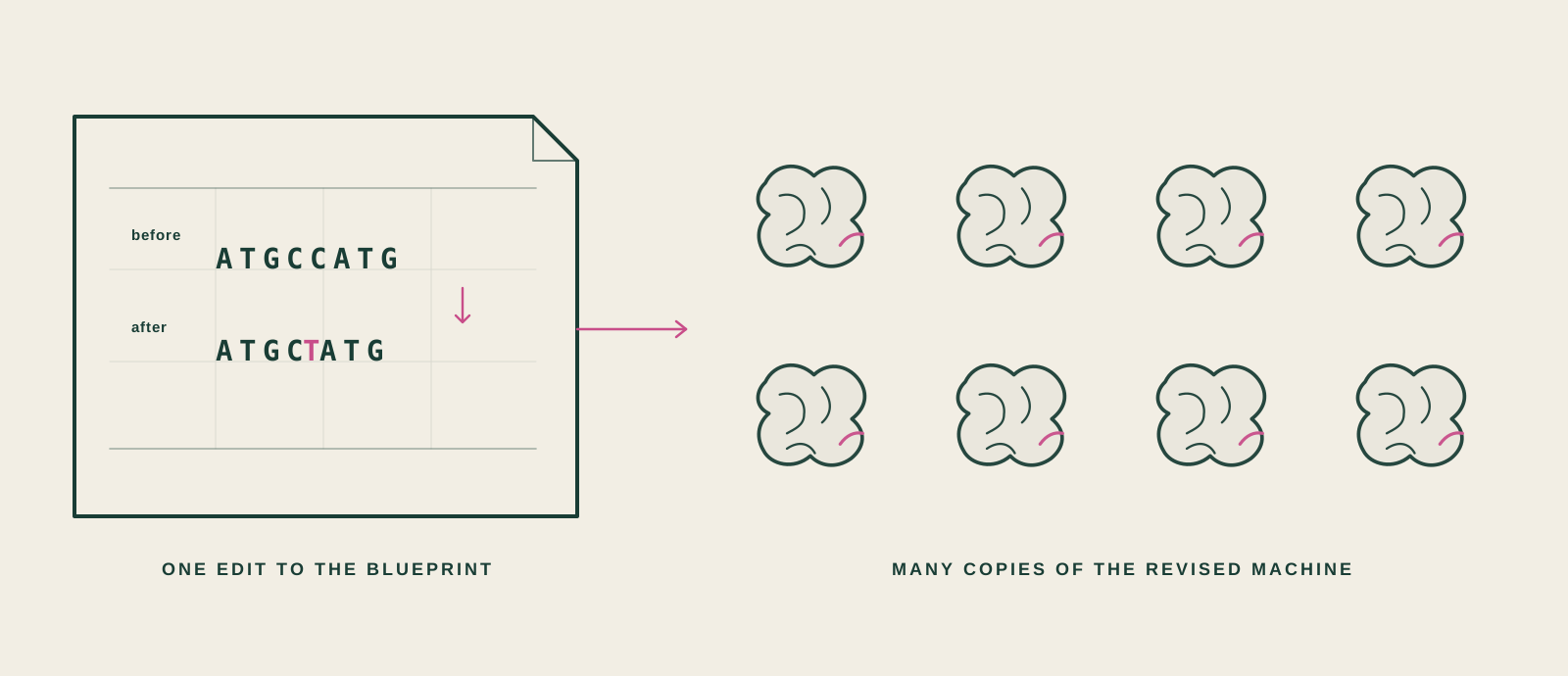
In general, cells protect their own DNA at all costs, because it has no backup—once a piece is broken beyond repair, it and the machine it encodes are lost forever. However, if we know what machine a certain genetic sequence is the blueprint for, and if we know what the machine does and how it’s assembled, we can tinker with the sequence to tinker with the machine. Since a single sequence is read many times to produce many copies of the same machine, this is much more efficient than tuning the machines themselves. We edit the sequence for the same reason we change the design of a car, rather than recall all cars of the same make and model every time. So, when a geneticist comes up with a way of genetically modifying an organism, this is pretty much what is meant by it. We detect a weak point in a tomato’s immune system that makes it more vulnerable to viruses and reinforce it by adjusting the design for a machine that erects the walls meant to stop viruses. Or, we might put the machinery that produces starch in rice grains into overdrive to make the grains fatter and tastier.
All that’s meant by “genetically modified organism” is giving an organism a tiny nudge toward a track we like a little better than the one it’s currently on. There’s nothing surreptitious about it, and it does not add anything to the contents of the modified organism besides what we control. Once you chew and swallow the genetically modified organism, your body breaks it down the same way it does an unmodified one, that is, entirely. Options that don’t include genetic modification normally include tools like pesticides, antibiotics, and hormones. These have much more unpredictable effects on the crop or livestock, not to mention the people who eat them. You could forgo all of the above if you feel that’s safer, but that comes at a much higher cost for you. There’s simply no way to grow many tons of crops, all of them at a high quality, without fear of disease or pests, and sell them at the same price as crops that were treated in a manner that makes growing them smoother.
I think the reason why many people prefer organic food is that they feel there is some sort of occult manipulation taking place behind the scenes before the food they’ll ingest reaches their plate. I understand this suspicion, since many practices of arguable benefit have been common in the past and still are—antibiotic overuse in feedlots is a familiar example. In reality, genetically modifying organisms is most likely the cleanest choice we have for improving livestock and cultivars (I’m also a fan of biological pest control), as it allows us to make pinpoint edits to blueprints for the exact machine we want to change while touching nothing else, and without leaving any chemicals inside the plant or animal. If you are willing to eat asparagus that was treated with hormones on an industrial farm, buying genetically modified asparagus is much easier to justify.
Footnotes
-
I know I’m ignoring red blood cells and viruses here, and I know bacteria are prokaryotes. Please don’t be That Guy. ↩

17 September 2026